If you have several credit-card balances, deciding which one to attack first can make the repayment process feel less overwhelming. Two widely used approaches are the debt snowball and the debt avalanche. Both ask you to keep up with required payments while directing extra money toward one chosen balance. The difference is which balance gets that extra payment first.
This guide explains the methods using a simplified U.S.-style credit-card example. Interest rates, minimum-payment formulas, fees, hardship options and consumer protections vary by issuer and country. Use your own statements and account agreements for the exact terms that apply to you.
First, understand what you are trying to reduce
A credit-card balance can become expensive when you carry it from month to month because interest is added according to the card's terms. Your statement shows the balance, annual percentage rate (APR), minimum payment and due date. If you have multiple cards, the rates and minimum-payment rules may be different.
Paying only the minimum can keep an account current if the payment reaches the issuer on time, but it can also extend the repayment period and increase the total interest you pay. The Federal Trade Commission explains that paying less than the full amount generally means interest is charged on the unpaid balance; missing the minimum can lead to fees and possible credit-history consequences. Read your statement's minimum-payment warning and payoff estimate rather than guessing.
1. What is the debt snowball method?
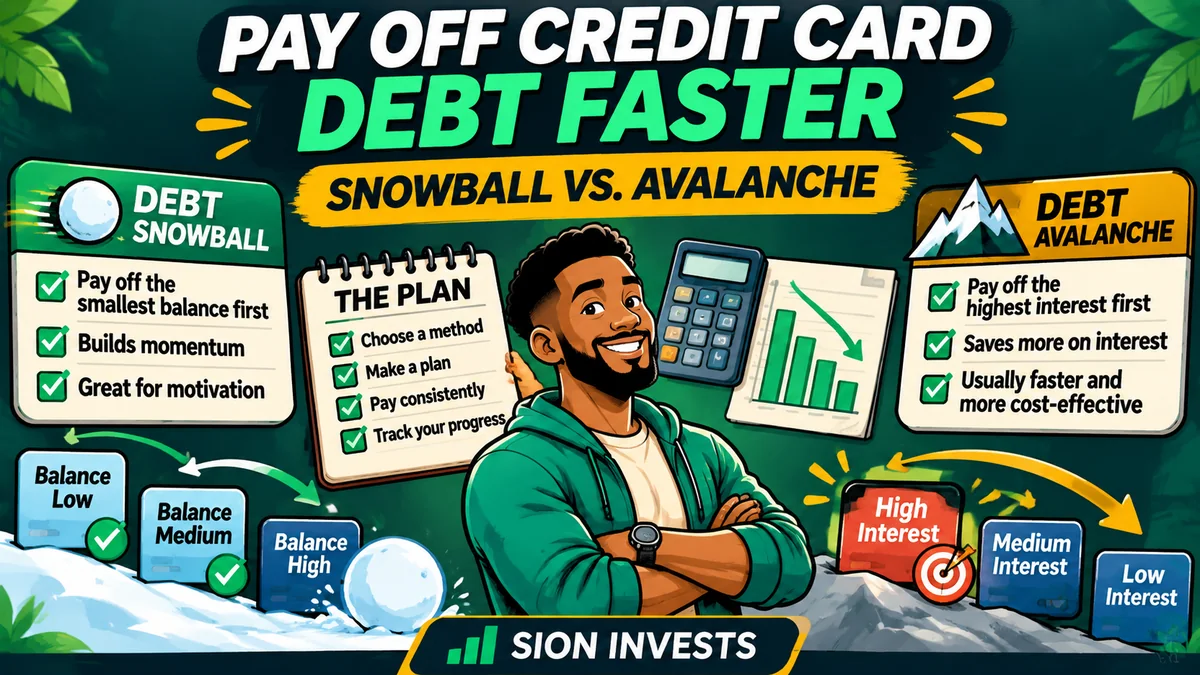
The debt snowball method orders your debts from the smallest balance to the largest, regardless of the interest rate. You keep paying at least the required minimum on every account. Then you put any extra amount in your debt budget toward the smallest balance.
When that smallest debt is paid off, you take the amount you had been paying toward it and add it to the payment on the next-smallest debt. As each balance disappears, the payment you can direct to the next one can grow—like a snowball gathering size as it rolls.
Why some people prefer the snowball
- Visible early progress: a small balance may be cleared sooner, giving you a concrete milestone.
- Simpler tracking: the target is determined by balance size, so the order is easy to understand.
- Motivation: quick wins may help some people stay engaged with a long repayment plan.
The trade-off is that the smallest balance may not have the highest APR. If you pay off a low-rate debt while a much higher-rate balance continues to accrue interest, you may pay more overall than you would with the avalanche method. The Consumer Financial Protection Bureau describes this trade-off: snowball can create a sense of progress, while the highest-interest approach can save money over time.
2. What is the debt avalanche method?
The debt avalanche method orders debts by APR, from highest to lowest. You keep making the required minimum payment on each account, then direct extra money toward the balance with the highest interest rate. After that balance is cleared, move the extra payment to the debt with the next-highest APR.
Why some people prefer the avalanche
- Targets the most expensive debt: the balance with the highest APR is the one growing fastest from interest, all else equal.
- Can reduce total interest: directing extra payments to the highest-rate balance first generally lowers interest cost compared with targeting a lower-rate debt, assuming the same payment budget and no unusual fees or rate changes.
- Fits a numbers-first approach: it prioritizes borrowing cost rather than the size of each balance.
The drawback is that your highest-rate debt might also be your largest. It may take longer to see a zero balance, which can make the plan feel slow. If that lack of visible progress causes you to abandon the plan, the mathematically cheaper method may not be the method you actually complete.
3. Snowball vs. avalanche: the main differences
| Question | Debt snowball | Debt avalanche |
|---|---|---|
| What gets paid extra first? | Smallest balance | Highest APR |
| Main advantage | Earlier payoff milestones can build momentum | Usually minimizes interest under the same assumptions |
| Possible drawback | Can cost more interest if high-rate debts wait | First payoff milestone may take longer |
| Best fit | Someone who values quick wins and needs motivation | Someone focused on reducing interest cost and able to stay consistent |
| What stays the same? | Keep paying at least the required minimum on every account and avoid adding new balances where possible. | |
4. Example: three credit cards and a $350 monthly debt budget
Imagine you have three credit-card balances and can consistently put $350 per month toward them in total. The figures below are illustrative, not an offer or a prediction of what a particular card issuer will charge.
| Card | Balance | Example APR |
|---|---|---|
| Card A | $600 | 18% |
| Card B | $1,500 | 24% |
| Card C | $3,000 | 29% |
| Total | $5,100 | — |
With the snowball, you target Card A first because its $600 balance is the smallest. With the avalanche, you target Card C first because its 29% APR is the highest. In both cases, you continue making the assumed minimums on the other cards and keep the total monthly debt budget at $350.
| Illustrative result | Snowball | Avalanche |
|---|---|---|
| First target | Card A · $600 | Card C · 29% APR |
| Estimated payoff time | About 18 months | About 18 months |
| Estimated interest paid | About $1,197 | About $1,050 |
In this simplified example, the avalanche saves about $147 in interest. Both methods take roughly the same number of months because the monthly payment budget is fixed, but the order of repayment changes how much interest accumulates along the way.
Calculation assumptions: balances accrue interest monthly at APR divided by 12; the illustrative minimum payment is the greater of $25 or 2% of the current balance, capped at the amount owed; the total payment budget is $350 per month; minimums are paid first and all remaining money goes to the method's target debt. Real issuers may calculate minimums differently, use daily periodic rates, apply fees, change APRs or allocate payments under different contractual rules. Actual results will differ. Treat this as a teaching example, not a personalized payoff quote.
5. How to choose the method you are most likely to finish
Choose the avalanche if your priority is paying less interest, the highest-rate balance is clear, and you can stay motivated even if the first account takes time to clear. It is especially worth considering when one card's APR is substantially higher than the others.
Choose the snowball if you have several small balances, feel overwhelmed by the number of accounts, or know that clearing one debt will help you stay committed. Paying a little more interest can be a reasonable trade-off if the alternative is abandoning your plan—but understand the cost before deciding.
You can also use a hybrid approach. For example, clear one very small balance to create momentum, then switch to the highest-APR debt. Write down the reason for the switch and keep the same total monthly payment budget so the plan remains intentional.
The best debt payoff method is the one that keeps every account current, directs extra money consistently, and is realistic enough for you to continue month after month.
6. Build a repayment plan in seven steps
- List every debt. Record the current balance, APR, minimum payment, due date and whether the account is current or past due.
- Protect essential bills first. Keep housing, utilities, food, transport, insurance and other essential obligations in view. If you are behind on several obligations, consider the consequences and seek qualified local guidance before choosing which creditor gets extra money.
- Bring past-due accounts into focus. Contact the creditor promptly, ask what options are available and get any agreement in writing. A debt strategy should not ignore overdue payments or collection notices.
- Set a sustainable monthly amount. Use your actual take-home income and necessary expenses. Choose an amount you can pay reliably, not an ambitious figure that causes you to borrow again for essentials.
- Pay at least the minimum on every account. Set reminders or carefully configured autopay if your bank balance can support it. Check that payments clear before the due date.
- Choose one target debt. Use the smallest balance for snowball or the highest APR for avalanche. Direct extra money to that target.
- Roll the payment forward. When a debt is cleared, add its former payment to the next target. Review the plan after any change in income, expenses, rates or fees.
7. Ways to make the plan work faster without taking unnecessary risks
Ask your card issuer about options
If the interest rate or minimum payment is difficult to manage, call the number on the back of the card. Ask whether a lower APR, fee waiver, due-date change or hardship arrangement is available. Explain what you can realistically pay. An issuer is not required to agree, so get the terms in writing and understand how the arrangement affects the account.
Be careful with balance transfers
A promotional balance-transfer offer may reduce interest for a limited period, but check the transfer fee, promotional end date, post-promotion APR, credit limit and payment rules. A low introductory rate is not the same as permanent low-cost borrowing. Avoid adding new purchases to a card unless you understand how the issuer applies payments and whether a grace period remains available.
Compare debt consolidation by total cost—not just the monthly payment
A consolidation loan may combine several payments, but it can include origination fees, a longer repayment term or a rate that changes. A lower monthly payment can still mean more total interest if the term is much longer. The CFPB recommends understanding why the debt accumulated, reviewing your budget and comparing the terms before taking out a consolidation loan. Be cautious of anyone promising to erase debt or guaranteeing a result.
Keep a small cash buffer if you can
Sending every available dollar to a card can leave you exposed to the next car repair, medical bill or urgent expense. If possible, keep a modest emergency buffer while making your planned debt payments. The right amount depends on your circumstances; even a small reserve may help prevent a new expense from becoming another card balance.
8. What if you cannot afford the minimum payments?
If you cannot make the required minimums, do not simply ignore the bills or wait for the situation to improve. Contact each card issuer as soon as possible, explain the difficulty and ask about hardship options. The CFPB advises consumers who cannot pay their credit-card bills to contact the card company immediately and consider reputable credit counseling if they need help reviewing their options.
Be wary of debt-relief companies that demand large upfront fees, guarantee that they can make debt disappear, or tell you to stop communicating with creditors or stop making payments without explaining the consequences. The FTC provides guidance on debt relief and warning signs. A reputable nonprofit credit counselor should explain services and fees clearly and should not promise a guaranteed outcome.
Frequently asked questions
Does the debt avalanche always save the most money?
When you have the same payment budget, keep all accounts current, and compare debts with stable rates and no unusual fees, targeting the highest APR first generally minimizes interest. Promotional rates, penalty APRs, fees, changing balances and contract terms can affect the result, so review the actual numbers.
Is the debt snowball a bad method?
No. It is a structured repayment strategy that prioritizes smaller balances and can help some people stay motivated. Its potential disadvantage is that a higher-rate debt may continue accruing interest while you clear smaller balances.
Should I pay off one card completely before paying extra on another?
For either method, keep paying at least the minimum due on every account. Then direct the extra amount to one target debt. Do not skip minimum payments on other cards to accelerate a single balance.
Should I stop saving while paying off credit-card debt?
Not automatically. High-interest card debt can be costly, but having no cash buffer can force you to borrow again when an unexpected expense occurs. Consider your essential expenses, job stability, access to support and the interest rate on the debt when setting a realistic balance between repayment and emergency savings.
Can I change from snowball to avalanche?
Yes. Your plan can change as your circumstances change. You might use the snowball to clear one small balance, then switch to the avalanche. Keep track of your payment budget and make sure every account's required payment remains covered.
The bottom line
The debt snowball and debt avalanche are two ways to organize the same core habit: make every required payment, then use extra money deliberately instead of spreading it randomly. Snowball prioritizes quick balance wins; avalanche prioritizes the highest borrowing cost. Compare your balances and APRs, choose a method that fits your motivation and budget, and review the plan whenever your circumstances change.
If you are still building your financial foundation, read our guides on building credit from scratch, creating a budget you can follow, and building an emergency fund.
This article is general educational information, primarily using U.S. credit-card terminology and consumer resources. It is not individualized financial, legal or credit advice. Interest calculations, minimum-payment rules, debt collection laws and consumer protections vary by issuer and jurisdiction. Review your account agreements and consult a qualified professional or reputable nonprofit credit counselor if you need help with your specific circumstances. See our financial disclaimer.
- Consumer Financial Protection Bureau — How to reduce your debt (snowball and highest-interest methods)
- Consumer Financial Protection Bureau — Reducing debt worksheet
- Investor.gov — Pay off credit cards or other high-interest debt
- Federal Trade Commission — Using credit cards and disputing charges
- Consumer Financial Protection Bureau — What to know about credit-card debt consolidation
- Federal Trade Commission — How to get out of debt